Product Strategy

Protecting Your Product Team from the Dreaded Process People

The Delicate Balance Between Structure and Innovation

8 min read Team Leadership
Process vs Innovation Balance

Every product leader faces the same dilemma: how to maintain just enough process to enable coordination without strangling innovation with bureaucracy. The wrong balance can transform agile product teams into document-generating departments that optimize for compliance over customer value.

According to an infamous Product Focus survey, product managers already spend 52% of their time on unplanned "fire-fighting" activities while struggling with competing objectives (56.4%), insufficient time (50.8%), and unclear roles (35.0%). Adding unnecessary processes only makes these challenges worse, yet some structure is essential for alignment and governance at scale.

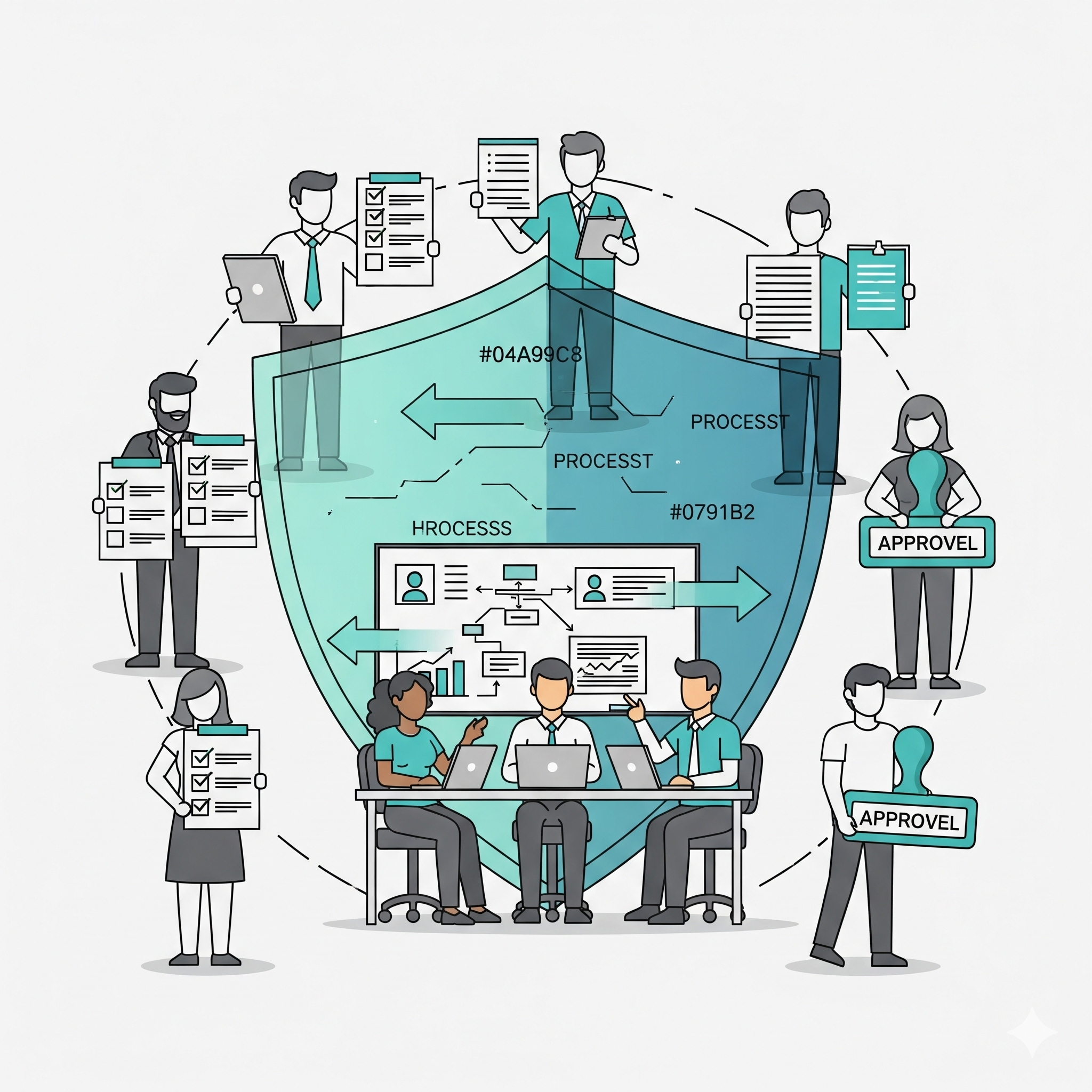
The most effective product leaders learn to shield their teams from process proliferation while implementing lightweight governance that actually enhances team effectiveness. This requires understanding the difference between value-adding structure and bureaucratic overhead, building relationships with process advocates, and creating frameworks that satisfy stakeholder needs without crushing innovation.

Based on experience navigating process challenges across startups and Fortune 500 companies, I will provide practical strategies for protecting your team's ability to move fast while maintaining necessary organizational alignment. You'll learn how to identify process red flags, negotiate lightweight alternatives, and build stakeholder coalitions that support innovation over compliance.

The Cross-Team Council Revolution

I worked with an engineering-driven company where I was responsible for driving the product marketing. I was only there to help promote what the engineers built, but I was not driving product strategy. As I observed over time, it was clear that the company was struggling with product management as program managers drove their backlogs entirely by customer requests funneled directly through sales teams. Over time, this created what any experienced PM would expect: a product that was essentially a random assortment of features with little cross-over benefit and no coherent strategy to help clients reach new levels of effectiveness.

Their process of talking only to the sales team for new features had to change, but they weren't going to listen to "some people in marketing." The sales-driven feature factory was creating chaos, but we had no authority to change the established workflow.

So my boss worked with the leadership team to create a new cross-team council that included marketing, support, sales, business development, and design. This council became a way to bring more voices into the product decision process without eliminating the sales team's input entirely.

This new approach transformed our program managers into actual product managers by building relationships with key stakeholders, incorporating diverse information sources, and making more cohesive long-term strategic decisions. It also reduced the sales team's ability to demand every random feature they thought we needed for every big deal in the pipeline.

While it was frustrating for the sales team at first, an unexpected benefit was that salespeople started to gain access to our future direction. This insight helped them win deals based on our vision for the industry, even when we didn't have every feature that our competitors offered. It transformed our salespeople from feature checklist matchers into strategic consultants, which was incredible for business.

The Process Optimization Paradox

The Innovation vs. Governance Dilemma

Product organizations face a fundamental tension between the need for innovation speed and the need for organizational alignment. Too little process creates chaos, misaligned priorities, and wasted resources. Too much process kills creativity, slows decision-making, and transforms product teams into compliance departments.

"Process should be like salt in cooking. Just enough to enhance the flavor, but too much ruins the dish entirely." - Reid Hoffman, LinkedIn

Ben Horowitz from Andreessen Horowitz provides additional insight: "The best product organizations have strong principles and light processes. The worst have weak principles and heavy processes." This distinction is crucial because principles guide decision-making while processes often constrain it.

The research supports this balance. According to a study by 280 Group, optimizing product management processes can lead to an average increase in company profits of 34.2%, but the key word is "optimizing," not "multiplying." The goal is effectiveness, not complexity.

Process People Types

The Four Types of Process People

As a product leader striving to improve your processes, understanding who you're dealing with helps you navigate process requests more strategically:

Well-Intentioned Optimizers

These people genuinely want to help but often create complexity in pursuit of perfection. They see problems and immediately think "process" is the solution. They're usually your best allies if you can redirect their energy toward lightweight solutions.

Risk-Averse Controllers

These stakeholders fear failure and create processes to prevent every possible mistake, often at the cost of innovation and speed. They need to see that smart principles can manage risk better than rigid procedures.

Empire Builders

These individuals expand their influence by creating processes that require their involvement or approval, making themselves indispensable gatekeepers. They're the most challenging to work with because their motivations aren't purely about organizational effectiveness.

Compliance Enforcers

These necessary but sometimes inflexible guardians ensure legal, regulatory, and policy requirements are met, regardless of business impact. They're usually non-negotiable, so the key is finding the minimum viable compliance approach.

The Lightweight Governance Framework

Strong Principles Over Heavy Processes: Establish clear decision-making principles that guide behavior without prescribing specific steps for every situation. For example, "Always validate assumptions with customer feedback" is better than a 10-step customer research approval process.

Minimum Viable Process: Implement the lightest possible process that satisfies stakeholder needs while preserving team autonomy and speed. Ask "What's the smallest change that addresses the underlying concern?"

Stakeholder Coalition Building: Create inclusive decision-making forums that satisfy the need for input without creating bottlenecks or endless committee meetings. The cross-team council approach works because it addresses multiple stakeholder needs simultaneously.

Validate Risk Assessments: Sometimes you can pushback on compliance and regulatory blocks by validating and accepting some of the risks transparently. There have been many times when lawyers have told me that something should not be included. When asked about case law, examples, or actual penalties though, the lawyer could not come up with anything. This helped me work with this person to find ways to track and mitigate the risks in a way that we could get the feature out.

Understanding these dynamics allows product leaders to navigate process requests strategically rather than reactively. Instead of fighting every process suggestion, you can evaluate them based on their underlying concerns and design better alternatives.

The Fortune 500 Process Awakening

My personal awakening to process reality came during my transition from startup environments to a large Fortune 500 company. I had what I now recognize as an allergic reaction to process people that actually got me into serious trouble.

In small companies, I could make a plan, execute with my team, and learn from results. The feedback loops were direct, and the consequences of decisions were immediate. In the enterprise environment, this approach was completely wrong, and I learned this the hard way.

When I first started, I had big ideas and started rolling them out to my team. Unfortunately, they shut me down almost immediately. I soon realized that to get anything done, I needed to write detailed PRDs, create business cases, and align stakeholders for support. This was a huge shock to my system. At first, I fought it, trying to squeeze out value-adding work under the radar whenever possible. This was a terrible strategy that nearly derailed my career.

The process people saw what I was doing and were waiting for it to fail to demonstrate how important their frameworks were. I guess I was naive, but it was surprising to discover how difficult they could make things for me when I tried to circumvent their systems. I felt like their mission in life was to crush innovation and turn everything into bureaucratic busy work.

So I tried a different approach. I started talking to them to understand what they really wanted. I explained what I was trying to achieve and why it mattered for customers and the business. I asked for their advice on how I could move forward. They began to see my perspective, and slowly we built working relationships.

I didn't escape the documentation and approval work, but I learned to do the bare minimum required to check their boxes. I followed their rules just enough, involved stakeholders appropriately, and learned to play the organizational game effectively.

What I discovered was that people weren't as resistant as they appeared. They just wanted to feel like they mattered and that their processes were useful. I learned that process people genuinely believe they're adding value, even when their procedures slow things down.

So I gave them their pound of flesh. I wrote the documents, attended the meetings, and followed the approval workflows. The result was that I could actually get things done with much less resistance. I just had to swallow my pride and pay what I came to think of as the "process tax."

This experience taught me that fighting process people directly is usually a losing battle. But working with them to understand their concerns and finding lightweight ways to address their needs can actually accelerate your ability to deliver value.

Navigating Process Proliferation in Real Time

Sometimes the biggest challenge isn't dealing with existing processes. It's preventing new ones from proliferating when problems arise. For process people with nothing to do, any organizational failure creates pressure to "improve our process" to prevent similar issues in the future.

Common process proliferation triggers include:

  • Customer complaints about product quality or communication
  • Failed launches that could have been prevented with "better planning"
  • Regulatory issues that require new compliance procedures
  • Cross-team coordination problems that someone wants to "solve with process"

The key is getting ahead of these triggers by proposing lightweight alternatives before heavy-handed solutions get implemented. When something goes wrong, be the first person to suggest a principle-based approach rather than a procedure-based one.

The Art of Process Negotiation

When faced with new process requirements, use this framework:

Understand the underlying concern: What specific problem is this process trying to solve? Often, the proposed solution is much heavier than necessary to address the real issue.

Propose lightweight alternatives: Can this be solved with better communication, clearer principles, or simple checklists rather than formal procedures?

Test and iterate: Suggest running a pilot version that accomplishes the stakeholder's goals with minimal overhead, then optimizing based on results.

Build coalition support: Find other teams who would benefit from a lighter approach and present a unified alternative.

Most process advocates are reasonable when they feel heard and when you demonstrate genuine concern for their objectives. The key is approaching these conversations as collaborative problem-solving rather than adversarial negotiations.

Implementing Your Process Protection Strategy

Week 1: Map Your Process Landscape

Start by identifying all the processes your team currently follows and categorize them by value: essential for legal/regulatory compliance, valuable for coordination, or bureaucratic overhead.

Survey your team about which processes slow them down versus which ones actually help them do better work. Create a visual map showing where process bottlenecks occur in your product development flow. This baseline assessment helps you understand where to focus your optimization efforts.

Key questions to explore:

  • Which approvals take the longest and add the least value?
  • What documentation requirements could be simplified without losing important information?
  • Where do process requirements conflict with customer feedback or market timing?

Week 2-3: Build Process People Relationships

Schedule one-on-one conversations with key process advocates to understand their concerns and objectives. This isn't about challenging their processes immediately. It's about building relationships and understanding their perspective.

Ask them what minimum requirements would satisfy their needs while preserving team agility. Find common ground by focusing on shared goals like risk management, quality assurance, or stakeholder alignment.

Sample conversation starters:

  • "Help me understand what problems this process solves for you"
  • "What would need to be true for you to feel comfortable with a lighter version?"
  • "What's the worst-case scenario you're trying to prevent?"

Month 2: Design Lightweight Alternatives

Create "minimum viable process" versions that satisfy stakeholder requirements without crushing innovation. Establish clear principles that guide decision-making without prescribing specific steps for every situation.

Build stakeholder councils or forums that provide input without creating approval bottlenecks. Test these alternatives with small pilots and gather feedback for refinement.

Implement regular "process debt" reviews where teams can identify and eliminate procedures that no longer add value. Just like technical debt, process debt accumulates over time and needs systematic attention.

Success metrics to track:

  • Time from idea to customer feedback
  • Number of approval steps required for different decision types
  • Team satisfaction with governance and support systems
  • Stakeholder confidence in product team decision-making

The Long-Term Advantages of Process Optimization

Organizations that successfully balance innovation speed with necessary governance develop competitive advantages that compound over time. They can respond to market changes faster while maintaining stakeholder confidence. They attract and retain top talent who want to do meaningful work rather than navigate bureaucracy.

Teams with optimized processes consistently demonstrate:

  • Faster time-to-market for new features and products
  • Higher employee satisfaction and lower turnover
  • Better stakeholder relationships built on trust rather than compliance
  • More innovation because creative energy isn't consumed by administrative overhead

The goal isn't eliminating all structure. It's creating the minimum effective dose of process that enables coordination while preserving the entrepreneurial speed that creates competitive advantage.

Key Takeaway

Protecting your product team from process proliferation isn't about avoiding all structure or fighting every new requirement. It's about building the right amount of governance to enable coordination while preserving the innovation speed that creates competitive advantage. The most successful approach is working with process people to understand their concerns and designing lightweight solutions that satisfy organizational needs without strangling creativity.

Building Your Process Protection Culture

Protecting your product team from process proliferation isn't about avoiding all structure or fighting every new requirement. It's about building the right amount of governance to enable coordination while preserving the innovation speed that creates competitive advantage.

The most successful product leaders learn to work with process people rather than against them, finding lightweight solutions that satisfy organizational needs without strangling creativity. This approach requires patience, relationship-building skills, and the wisdom to know when to pay the process tax versus when to advocate for alternatives.

This balance becomes increasingly important as organizations scale and face pressure for more formal governance. Teams that master this balance can move fast while maintaining stakeholder confidence, creating sustainable competitive advantages through both innovation and organizational effectiveness.

At Collective Nexus, I help product leaders navigate these organizational dynamics through frameworks that balance innovation speed with necessary governance. Whether you're dealing with well-intentioned process optimizers, building stakeholder coalitions for change, or transitioning between organizational contexts, the key is understanding that process people often have valid concerns that can be addressed through thoughtful design rather than resistance.

The frameworks I teach through AdaptableProduct.com include specific modules on organizational navigation and stakeholder management that help product managers succeed in complex environments. For organizations ready for systematic process optimization, Collective Nexus strategic consulting offers customized approaches that preserve innovation while satisfying governance requirements.

Struggling with process proliferation in your product organization? Let's discuss strategies for building lightweight governance that enables rather than constrains your team's ability to create customer value. The goal isn't eliminating all process but optimizing for the outcomes that matter most to your business and your customers.

About Collective Nexus

We develop adaptive leaders and anti-fragile organizations through proven frameworks that combine strategic thinking with human connection. Ready to transform uncertainty into your competitive advantage?

Related Articles

Adaptable Product Leadership
From Feature Teams to Product Value Creation Teams

Break free from the feature factory mindset and build teams organized around customer outcomes rather than output metrics.

Product Operations
The Risks of Product Operations: When Process Becomes Your Product

Navigate the emerging discipline of product operations without falling into the trap of optimizing internal processes over customer value.